From Basics to Advanced Applications
Large language models have changed the way we build software, but they come with two problems that any engineer can see clearly: they hallucinate, and they go stale. Ask them about your internal API, or about news that broke yesterday, and you’ll often get confident nonsense. Retrieval-Augmented Generation (RAG) is the most widely adopted method for addressing this issue.
Instead of relying on whatever the model memorized, RAG gives it a way to “look things up” at inference time. A retriever fetches relevant chunks from a knowledge base, and the generator conditions its response on those chunks. Lewis et al. (2020) showed this could drastically reduce hallucinations for knowledge-intensive tasks. Since then, the pattern has become a backbone of enterprise AI.
From Naive Pipeline to Production System
The naive RAG pipeline has four steps.
- The query is embedded into a vector.
- That vector is searched against a database of document vectors.
- The system retrieves the top-k most similar chunks.
- Those chunks are appended to the model’s prompt so the LLM can generate a response.
What makes it possible are embeddings—numerical representations of text that capture semantic meaning rather than surface form. Two sentences that mean the same thing end up close together in this space, even if they use different words.
For example, “capital of France” and “largest city in France” produce embeddings that sit near each other, which is why embedding-based retrieval can find “Paris” even if the phrasing does not match exactly.
In a RAG system, both the user’s query and every chunk in the knowledge base are turned into embeddings, and the retriever compares them using similarity measures like cosine distance or inner product. The strength of the embedding model largely determines how good the retrieval will be.
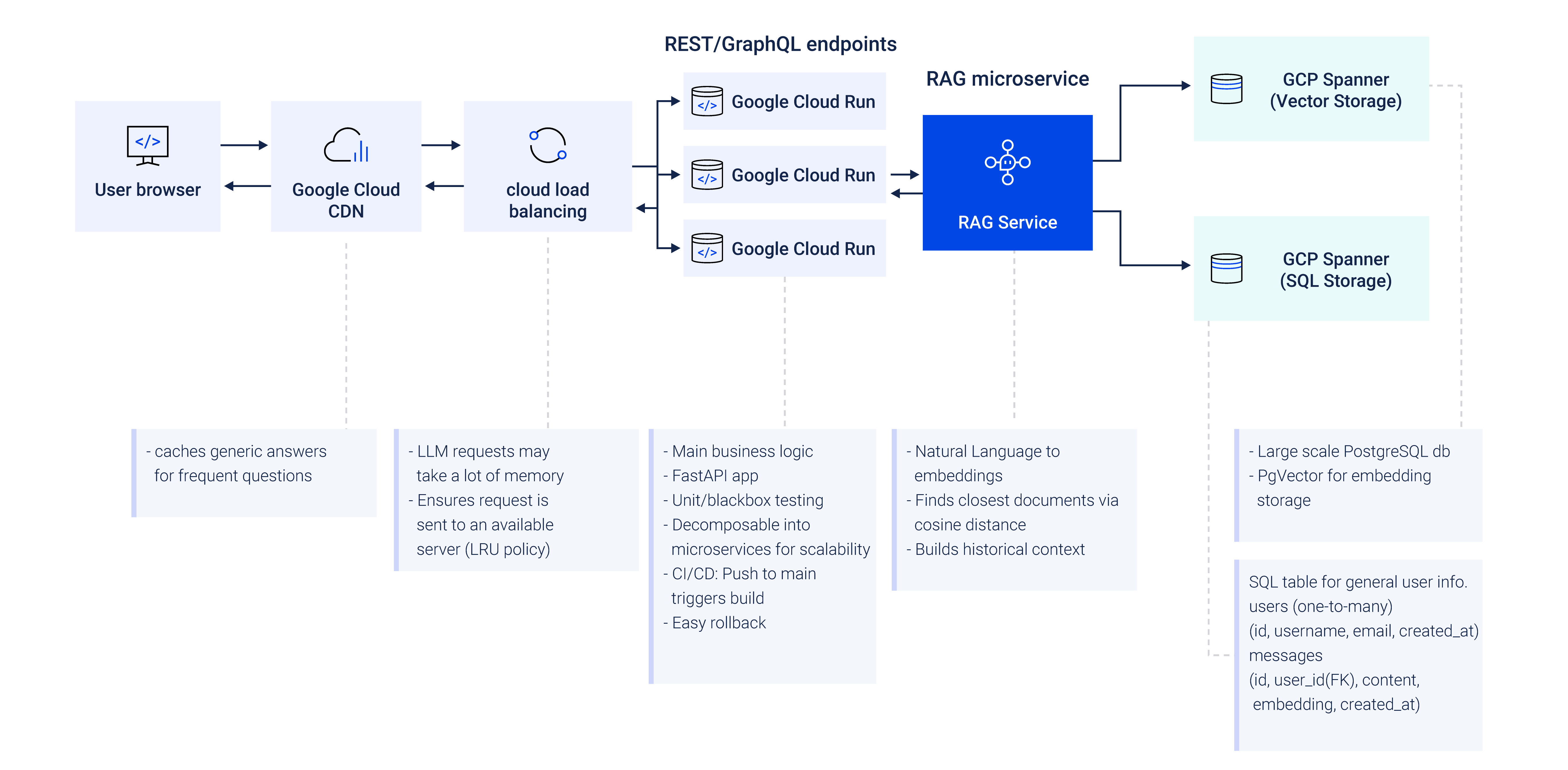
This simple loop, embed, retrieve, generate, makes RAG look powerful in theory, yet it often struggles in practice. Retrievers that rely only on top-k search can return irrelevant or redundant chunks, and large documents may end up split in ways that strip away their context. The model’s context window fills with noise, and as the system scales to millions of documents, latency and cost grow with it.
How Retrieval Actually Works
Retrieval usually falls into two families: sparse and dense.
Sparse methods rely on exact word matches. BM25, for instance, breaks documents into tokens and builds an inverted index—a structure mapping each word to the documents where it appears. When a query comes in, the retriever looks up those words, finds relevant documents, and scores them based on how often the words appear and how rare they are.
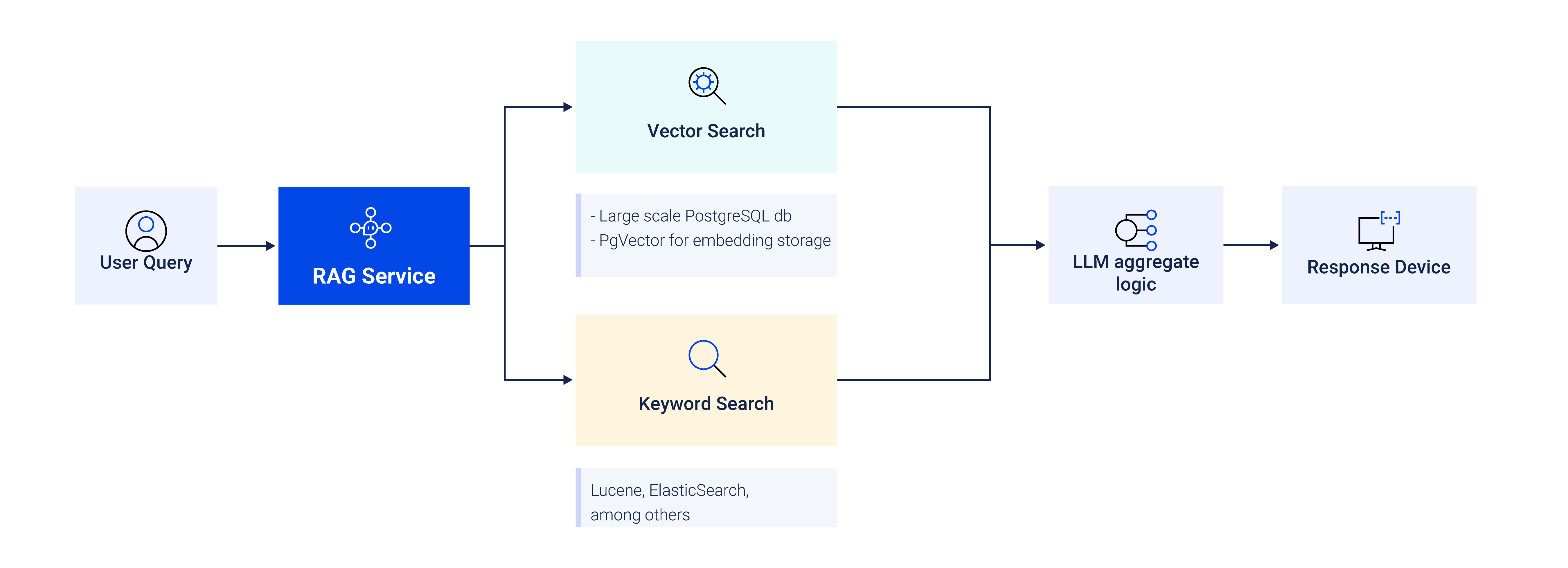
Sparse retrieval is cheap, transparent, and scales to billions of documents—systems like Lucene and Elasticsearch are built on it. The drawback is that it depends on shared vocabulary: a query like “largest city in France” may miss a document that only says “capital of France.”
Dense methods solve this by working with meaning rather than words. An embedding model converts both queries and documents into high-dimensional vectors, so retrieval becomes a nearest-neighbor search in vector space. Because brute-force comparison is slow, approximate nearest neighbor (ANN) algorithms like HNSW and IVF-PQ speed things up dramatically. Dense retrieval captures nuance far better, but it requires more tuning and infrastructure.
In practice, most production systems use hybrid retrieval, combining sparse and dense signals. Sparse gives precision on exact keywords; dense provides flexibility on semantics. Weighted together, they produce more reliable results across diverse queries.
Getting Indexing Right
What you index matters as much as how you search it. A clean, well-structured knowledge base gives your retriever a fighting chance, while a messy one guarantees messy results. That’s why preprocessing and chunking are central to RAG design.
- Fixed-size chunking: Cut text into equal blocks of N tokens. Simple but often slices through context.
- Recursive chunking: Splits by section → paragraph → sentence, preserving structure.
- Semantic chunking: Uses embeddings to split text where semantic similarity drops.
- LLM-based chunking: A model segments the text into meaningful units, like a human would.
Each method balances precision vs. recall. Small chunks improve targeting but lose context; large chunks preserve context but risk flooding the prompt. Many production systems use overlapping sliding windows for the best of both worlds.
In short, chunking defines the “units of meaning” your RAG pipeline works with. Get it wrong, and you either starve the generator of context or drown it in noise.
Smarter Queries
Even with a clean index, retrieval often fails because of the query itself. Users rarely phrase things the same way the data does. To bridge that gap, RAG pipelines often transform queries before searching.
- Query rewriting: Reformulate vague questions into corpus-friendly phrasing.
- Query expansion: Generate multiple variations to improve recall.
- Decomposition: Split complex multi-part questions into smaller ones.
- Query routing: Direct the question to the right knowledge base (e.g., legal vs. product).
These techniques add overhead but make the system consistently useful. They’re often what separates a toy RAG demo from a production-grade application.
Post-Retrieval Optimizations
Retrieving the right chunks is only half the job. What happens next determines answer quality.
- Re-ranking: Uses heavier models to rescore retrieved documents for sharper relevance.
- Example of the re-ranking technique

- Context compression: Removes redundancy or summarizes text to fit context limits.
- Metadata enrichment: Adds timestamps, source labels, or authorship cues.
- Prompt formatting: Structures retrieved text for clarity (e.g., clean “Sources” section).
Together, these steps tighten the link between retrieval and generation, ensuring the LLM sees only clear, relevant, and useful context.
Beyond Plain Text
Not all knowledge lives in text. Enterprises hold data in tables, images, and videos. Extending RAG to these modalities is the next frontier.
- Structured data: Embed spreadsheet rows or cells for retrieval via natural language.
- Images: Use models like CLIP to align visual and text embeddings.
- Video: Combine transcripts, visual frames, and time markers to find exact segments.
Multimodal RAG remains complex, but the direction is clear: grounding LLMs in all data types is key to enterprise AI maturity.
Evaluation in Practice
Evaluating RAG means asking three questions:
- Is the retriever pulling the right evidence?
- Is the generator using that evidence?
- Does the system solve the end-user’s problem?
Offline evaluation uses curated datasets to measure metrics like:
- Recall@k / Precision@k – Are relevant documents retrieved?
- nDCG – How well-ranked are the results?
Generation metrics focus on faithfulness and groundedness (e.g., RAGAS).
Online evaluation tests user impact—through A/B tests, user feedback, or implicit signals like reformulations or session drop-offs.
A strong evaluation framework has three tiers:
- Retrieval metrics (recall, precision, nDCG)
- Generator metrics (faithfulness, factuality)
- User outcomes (task success, latency, satisfaction)
Without all three, optimization risks drifting away from user value.
Open Problems
RAG is powerful but imperfect. Common challenges include:
- Misalignment between retriever and generator optimization
- Context window limits and data poisoning
- Latency and memory trade-offs in dense retrieval
- Fragile multimodal alignment
- Lack of standard joint evaluation methods
The next wave of innovation will likely focus on end-to-end co-optimization and robust evaluation frameworks.
RAG Is Foundational to Reliable Enterprise AI
RAG is not magic, but it is practical. It connects the frozen knowledge of pretraining with the living knowledge that engineers and users actually need.
If you’re new to AI engineering, RAG is more than just another acronym, it’s the architectural pattern behind modern enterprise AI. Understanding its algorithms, trade-offs, and evaluation methods is essential for building systems you can trust.
References
- Lewis, P., Perez, E., Piktus, A., Petroni, F., Karpukhin, V., Goyal, N., … & Riedel, S. (2020). Retrieval-augmented generation for knowledge-intensive NLP tasks. NeurIPS. arxiv.org/abs/2005.11401
- Karpukhin, V., Oguz, B., Min, S., Lewis, P., Wu, L., Edunov, S., … & Yih, W. T. (2020). Dense passage retrieval for open-domain question answering. arxiv.org/abs/2004.04906
- Thakur, N., Reimers, N., Rücklé, A., Srivastava, A., & Gurevych, I. (2021). BEIR: A heterogeneous benchmark for zero-shot evaluation of information retrieval models. arxiv.org/abs/2104.08663
- Weaviate. (2024). Advanced RAG Techniques: A Practical Guide. Weaviate eBook.