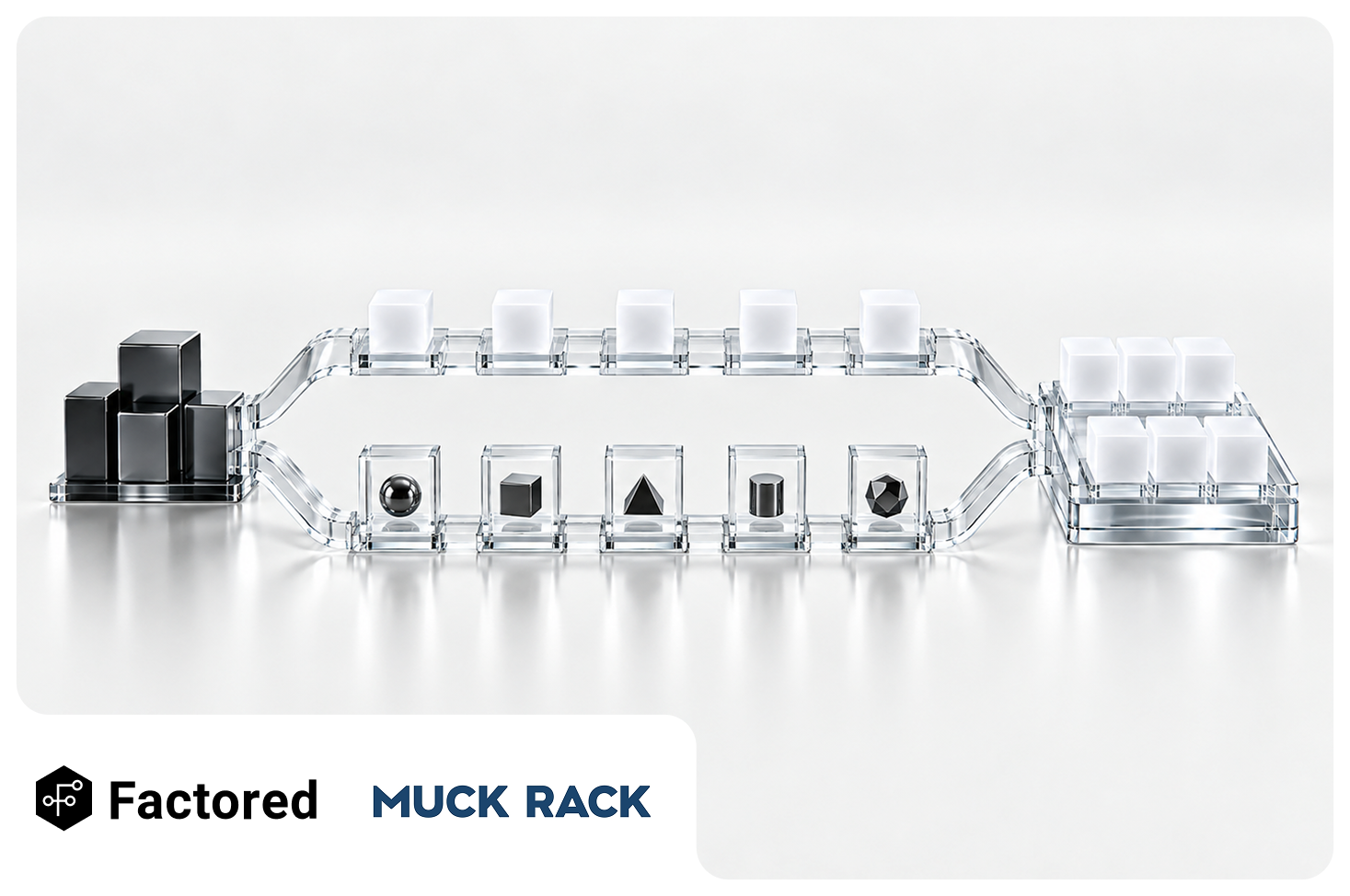
Server-Side Analytics Restores Metric Accuracy Under Privacy Constraints
Factored engineered a server-side data ingestion pipeline for a major Retail & CPG player to remediate the loss of critical signals caused by privacy restrictions on traditional client-side tracking.
Client-Side Tracking Losing Critical Signals
In the current Retail & CPG landscape, privacy restrictions have significantly reduced the reliability of traditional client-side analytics tools. Our client faced a critical data gap: the loss of key signals constrained their ability to measure "Operational Reality" and accurately track digital performance. This lack of data integrity created a significant barrier to effective reporting and strategy.
Restoring Data Integrity Under Structural Constraints
The strategic challenge was to architect a solution that could bypass the fragility of client-side tracking while remaining fully compliant with privacy requirements. We needed to transition from an ineffective tracking model to a robust, backend-driven architecture that analytics teams could trust—effectively de-risking the "Execution Risk" associated with inaccurate performance data.
Server-Side Ingestion and Delta Tables
Supported by our Data Engineering Center of Excellence, we engineered a cloud-native pipeline built for precision and scale.
Technical Components:
- Databricks Pipelines: Operationalized the ingestion of backend events to ensure consistent, reliable data capture without relying on the user's browser.
- Delta Tables: Built a structured storage layer to house normalized events, providing the high-fidelity data required for advanced analytics.
- Integrated Logic: Engineered transformation layers to support both standard performance reporting and automated anomaly detection.
Results: Metric Accuracy and Institutional Confidence
The solution was successfully operationalized into the client’s analytics workflow, delivering a measurable shift in their data capabilities:
- Metric Accuracy: Restored digital performance measurements allowing for more accurate tracking of the customer journey.
- Regained Confidence: Analytics teams moved from data skepticism back to evidence-based reporting, supported by technical receipts from backend events.
- Anomaly Detection: The centralized Delta table architecture provided the necessary scaffolding to implement automated anomaly detection, identifying discrepancies faster than traditional methods.